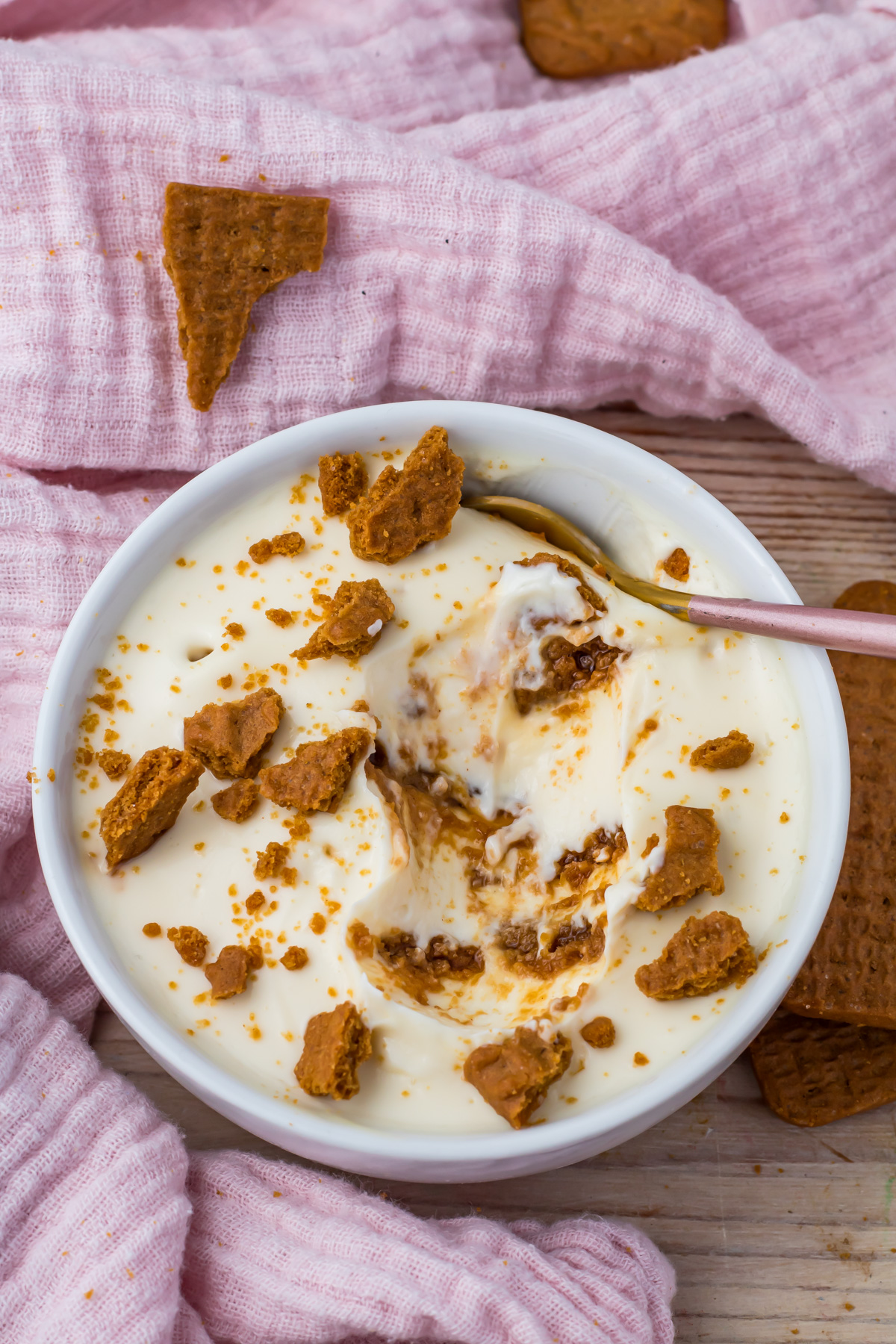
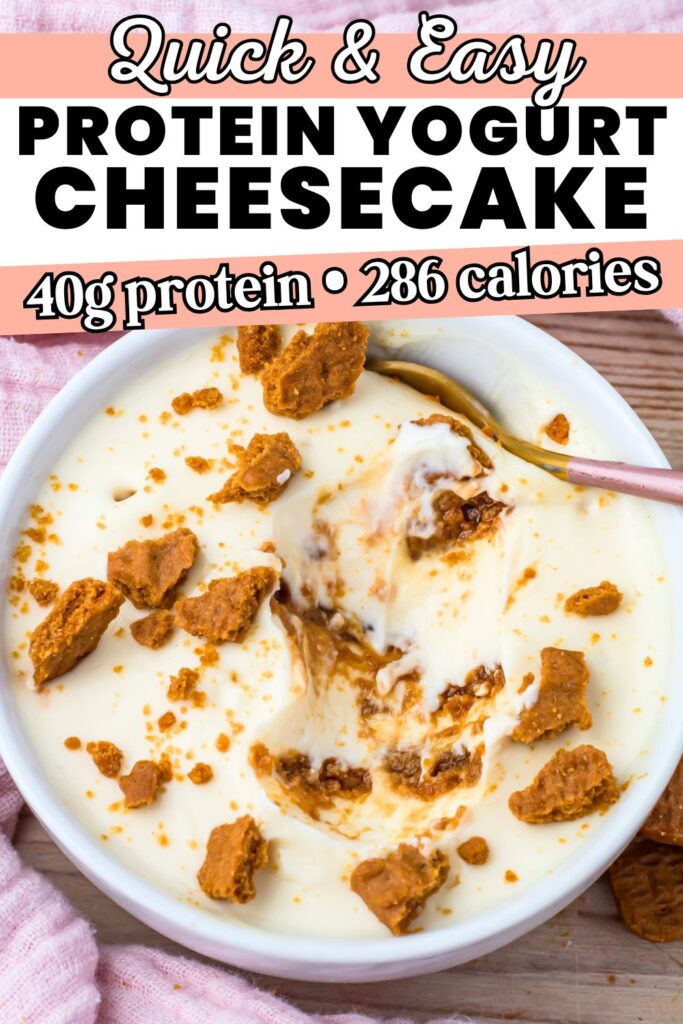
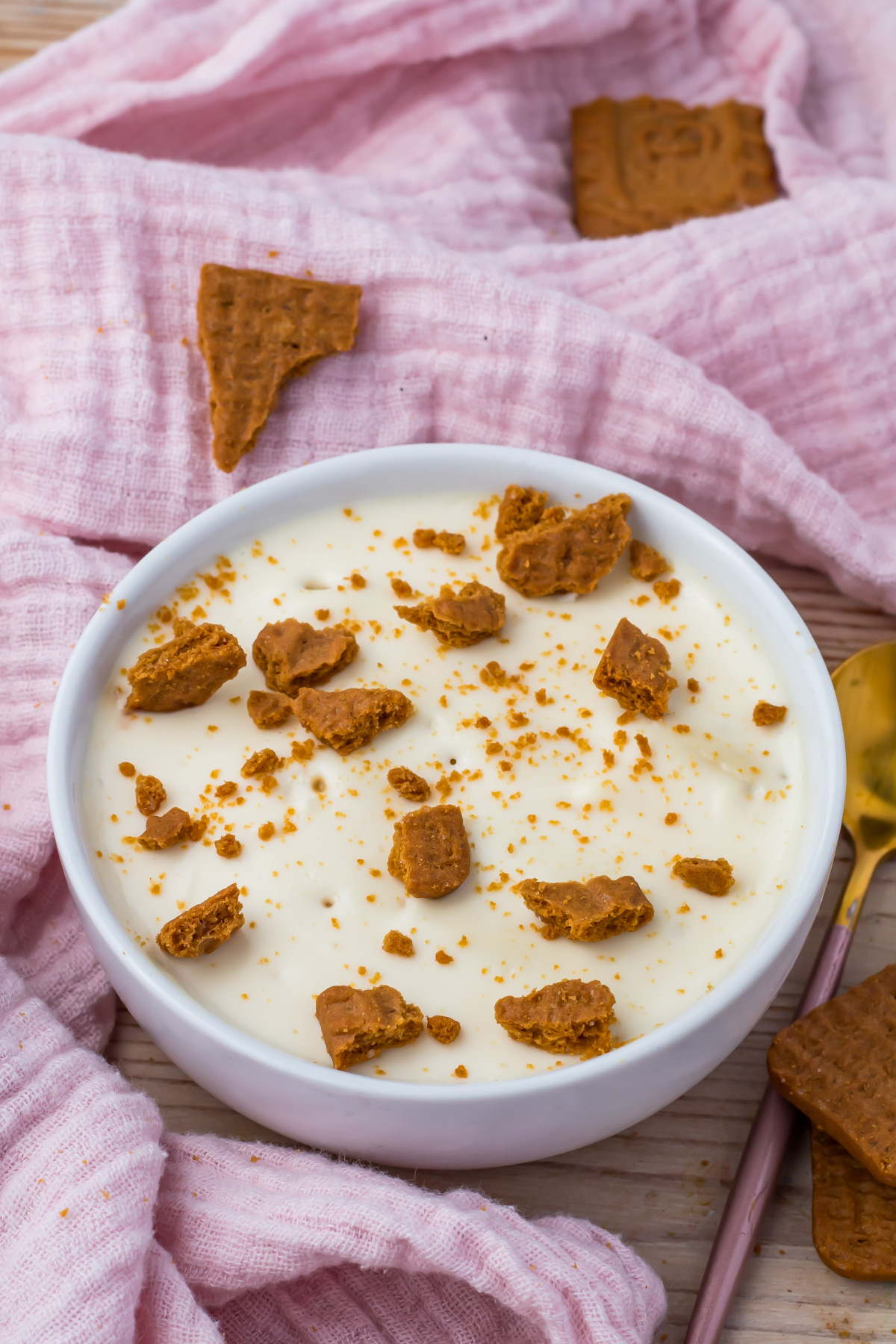
Greek yogurt protein cheesecake is a cold, spoonable dessert you build in five minutes, no oven, no springform pan. One serving hits 40g protein for 286 calories, from thick Greek yogurt, a scoop of vanilla protein powder, and a couple of cookies. Chill two hours and the cookies turn crust-soft, ready for a post-workout or late-night spoon.
Key ingredients and substitutions
- Greek yogurt: the tangy, creamy base and part of the protein total. Full-fat gives a richer mouthfeel, fat-free keeps calories lower, both set up the same. Use thick, strained Greek yogurt, not regular, or it won’t hold the cookies or stay spoonable.
- Vanilla protein powder: carries most of the 40g and the sweet cheesecake flavor. Whey, a blend, or a smooth plant-based powder all work. Vanilla, cheesecake, or birthday cake flavors taste closest to the real thing. Skip gritty budget powders, they show up in the texture.
- Cookies: soften in the fridge into a crust-like layer. Biscoff is my default. Graham crackers or digestives lean more traditional cheesecake. Any crunchy cookie works.
How to make greek yogurt protein cheesecake


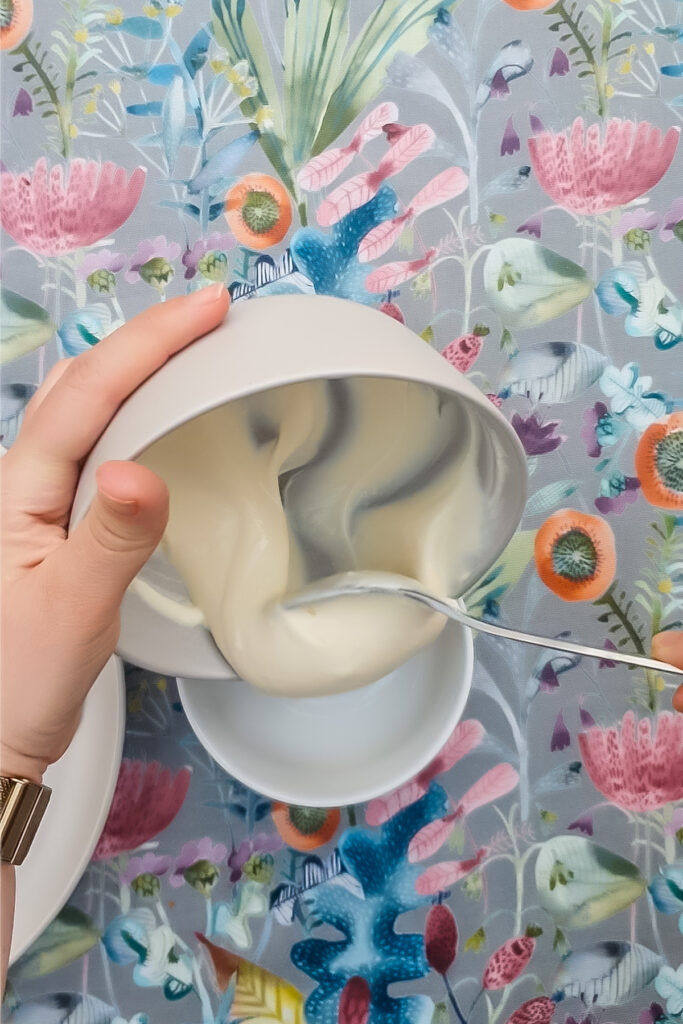

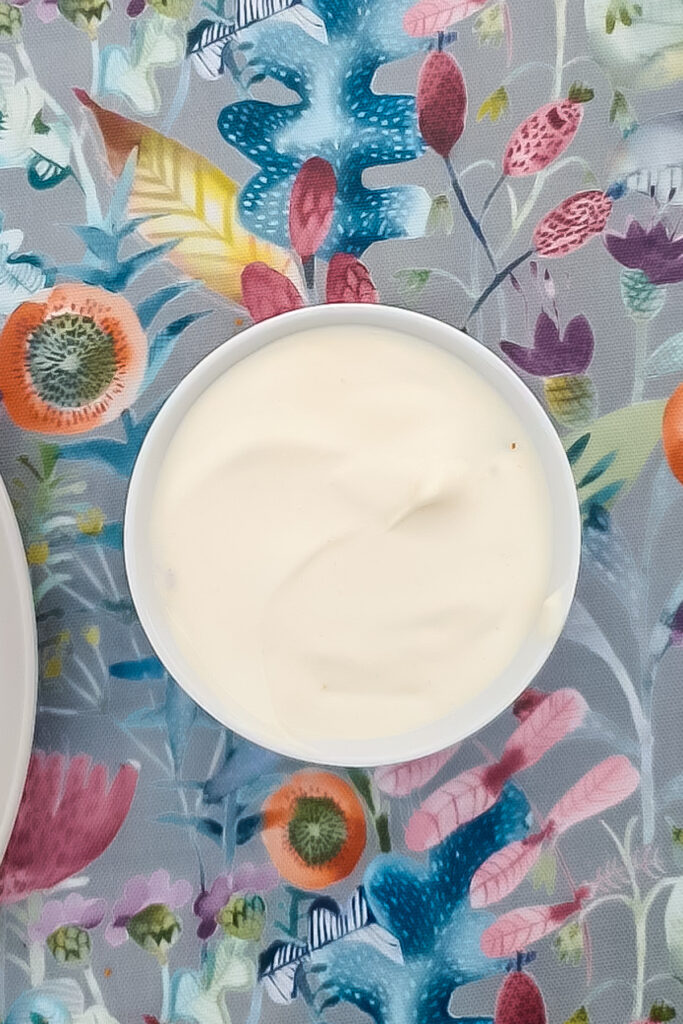
- Blend the base. Stir ¾ cup Greek yogurt and 1 scoop vanilla protein powder until completely smooth, with no powdery streaks left. Any lumps here stay in the finished cheesecake.
- Transfer to a small bowl. Scrape it into a small dip or snack bowl, the kind you’d use for hummus. It fills out and looks far more generous than in a wide cereal bowl.
- Add the cookies. Slide 2 cookies down into the mixture vertically. Break them into pieces first for even distribution, or leave them whole for bigger soft chunks. You can spoon a little extra yogurt mixture over the cookies to cover them if you have any left in the bowl (I scraped the bowl here).
- Chill at least 2 hours. Cover and refrigerate so the cookies pull in moisture and soften into that crust texture. Overnight is even better.
- Top and eat. Scatter a few crushed cookies over the top and dig in with a spoon.

Tips for getting it right
A powdery, lumpy mix is the one thing that ruins this, and it almost always comes from stirring the protein powder in too fast.
- Add the powder in two goes, stirring smooth between, or use a mini whisk. A splash of milk loosens a too-thick mix without watering down the flavor.
- Give it the full 2 hours. Rushed cookies stay crunchy instead of turning cake-soft.
- Use thick, strained Greek yogurt. Regular yogurt won’t hold the cookies or set spoonable.
- Fat-free gets slightly watery past 48 hours. Eat those within a day, or use full-fat if you’re saving half.
Variations
- Oreo cookies and cream: swap in chocolate sandwich cookies and use cookies-and-cream or chocolate protein powder.
- Strawberry cheesecake: fold chopped strawberries or a swirl of sugar-free strawberry jam through the base before chilling.
- Peanut butter chocolate: stir a tablespoon of peanut butter into the base and top with grated dark chocolate.
- Lemon: add lemon zest and a squeeze of juice for a brighter, New York-style tang.
- White chocolate lime ginger: Use white chocolate protein powder (or vanilla + a bit of melted white chocolate stirred in), some zest and juice from one lime for bright tang, and crushed ginger snaps for the cookie layer.
- Turtle caramel pecan: Use caramel-flavored protein powder or a tiny drizzle of sugar-free caramel, then mix in chopped pecans and top with more for gooey, nutty decadence.
What to serve with it
- Fresh fruit: a handful of raspberries or blueberries for a juicy contrast to the creamy base.
- Coffee: an iced oat milk latte alongside makes it an afternoon treat.
- Nut butter: a thin drizzle of almond or peanut butter for extra richness and fats.
- Dark chocolate: a square of 70-85% on the side.
Frequently asked questions
You can use extra Greek yogurt and a little sweetener, but you’ll lose most of the 40g protein, since the powder is where the bulk of it comes from.
Only if the cookies are. Biscoff and graham crackers contain gluten, so swap in certified gluten-free cookies to make the whole thing gluten-free.
Yes. A thick, strained plant-based Greek-style yogurt (coconut or almond) works well paired with a dairy-free protein powder. The tang will be slightly different.
Covered in the fridge for up to 3 days, and the cookies keep softening over time. Fat-free versions get a little watery after 48 hours, so eat those sooner. Don’t freeze it, the yogurt turns grainy and the cookies go mushy.
Yes. Multiply the ingredients and divide into separate bowls before chilling, keeping the same 2-hour minimum for each.
More protein desserts you will love
- Chocolate Protein Mug Cake
- Cottage Cheese Chia Pudding
- Cottage Cheese Chocolate Mousse
- Cottage Cheese Banana Pudding
- Snickers Frozen Cottage Cheese Bark
Have you made this recipe? I’d love to know <3 Tag me on Facebook and Instagram, Pin it on Pinterest, and please give it 5 stars with a review below! Don’t forget to subscribe to the email list (top right of this page) for sparkly new recipes in your inbox.

Protein Yogurt Cheesecake Recipe

Ingredients
- ¾ cup Greek yogurt - full-fat or fat-free
- 1 scoop vanilla protein powder - or another flavor of your choice
- 2 cookies - I use biscoff but any crunchy cookie will work, or graham crackers
Instructions
- In a medium bowl (like a cereal bowl), mix together the yogurt and protein powder.¾ cup Greek yogurt, 1 scoop vanilla protein powder
- Pour the mixture into your serving bowl. I use a small dip/snack bowl.
- Insert the cookies vertically into the yogurt mixture. I like to break mine apart to distribute them more evenly throughout the cheesecake.2 cookies
- Refrigerate for at least two hours.
- Top with more crushed cookies if desired and enjoy!
Notes
- Stir the protein powder in gradually. No lumps.
- Full 2-hour chill. Rushing leaves cookies crunchy.
- Thick strained yogurt only, or it won’t set.
- Too thick? A splash of milk loosens it.